Severity: Notice
Message: Undefined variable: pagecount
Filename: controllers/document.php
Line Number: 4926

Unlock these Enterprise features for free for 7 days:
Title: Official Demand Letter
Document ID: 0
Document Completed:
No Document History |

Title: Official Demand Letter
Document ID: 0
Document Completed:
No Document History |

The name of the person or company you'll enter will be used in the E-signature Agreement.
All signature fields must have an assigned signatory before the document can be sent for signing.
Please add signature fields and assign signatories before sending out the document.
The document will not be sent for signing.
Any changes to this document will require you to resend the document for signing.
All signatures on this document will be deleted and all signatories will be notified.
Document will only be sent to signatories who have not yet signed.
Copy the link
Your Session is already expired. Please login.

An Official Demand Letter is a formal letter used to request a person or entity that owes money or possession of assets to settle it with the creditor. It serves as the last notice before the creditor takes legal action. It contains the details of the debt, demand for restitution, response deadline, and consequences for not resolving the dispute.
A creditor must send the Official Demand Letter after efforts and attempts made from good faith have been carried out. This can be done through phone calls and messages, emails, postal mails, and the likes to remind the debtor of his obligation to settle payments.
A person or company that intends to collect money from a debtor can write an Official Demand Letter. Here are some examples of when to send this letter:
In writing an important letter like the Official Demand Letter, you must be straightforward and serious to keep it professional. This will let the recipient know that you are really considering a lawsuit if your demand was not met.
Be calm and polite in choosing the words that you will include in your demand letter. By doing this, you will probably receive the same treatment and both parties can avoid further misunderstanding or argument.
For your convenience, PDFRun has an official demand letter template that you can use. The demand letter template should be filled out with the following information:
Heading
Enter your full name, full address, city, state, and ZIP code
This section includes who and where did the demand letter come from.
Date
Enter the date that you are writing this letter
This section includes the date when the demand letter was written.
Salutation
Enter the name of the recipient
This section includes to whom did you send the demand letter.
Body
Enter your full name
Enter the details of your demand
Enter the response deadline
This section includes the detailed purpose and facts of the creditor’s demands. If the debtor failed to follow the conditions stated in the demand letter, the creditor can take legal action to resolve the dispute.
Conclusion
Attach your signature
Wrap up the demand letter by signing it.
Tips:
If you wish to edit or personalize the body of the letter, here are a few suggestions that might help you in doing so:
Be specific with your purpose and include facts.
State the reason why you are writing a demand letter. Even though the sender and the recipient are already well aware of the situation, you still need to put your side of the story into the legal document. Provide a clear description of all the damages caused by the recipient’s breach of the agreement. Insert the exact date and time of the incident to add credibility to your claim.
If you end up in a courtroom, this letter will reveal what really happened during the initial dispute and subsequent efforts you made to resolve the case.
Be clear with your demand(s).
Right from the start, you should know what you’ll be requesting from the debtor. Do not beat around the bush; be straightforward. If money is involved, include a specific amount to settle. Explain thoroughly to the recipient how you arrived at that amount such as lost income, property damage, and the other relevant costs.
Set a deadline.
Insert a specific date in your letter to let the recipient know that he or she should deal with it as soon as possible. Seven to fourteen days is usually the best and recommended duration for the response deadline. Do not fail to mention, in a non-threatening way, that consequences will follow if the said date will not be met.
Consult an attorney.
You must consider the possibility that this matter might need to be discussed with a judge in a courtroom. Before sending your demand letter, you might want to consult an attorney and get it checked. This precaution is being advised in order to prevent the information from the demand letter be used against you.
Keep a personal copy of the letter.
Make a copy of your letter before actually sending it to the recipient. You should also keep all correspondence from your adversary. If you sent it via email, do not delete anything and take screenshots if possible.
Send the letter through certified mail.
Sending the letter through certified mail with a return receipt is the best way possible. If by any chance that you actually end up in court, you can present the return receipt as a piece of evidence to dismiss the excuse of the debtor that he or she did not receive any mail.
Once you receive an Official Demand Letter, make sure to not ignore it regardless of whatever you decided to do with it.
PDFRun is an online PDF editor platform that enables its users to find, edit, electronically sign, download, and share forms and documents anytime and anywhere, using any device.
With a cloud-based archive of thousands of forms and documents, it fast-tracks the document management processes of many professionals and businesses of different sizes, across many industries.
Through its user-friendly and easy-to-navigate interface, users may also upload their own files to fill out, edit, convert, e-sign, and share to multiple recipients to request signatures.
PDFRun streamlines document management processes, improves documentation workflows, and enhances its users’ efficiency, resulting in better productivity and an increase in work output.
1-888-245-8984
Monday - Friday
7:00AM to 4:00PM PST
Use the File button to access functions such as New PDF, New Page, Organize Pages, Save, Save As, Print, Export, Share Link, Email, and Postal Mail.

Use the Text button to add texts, numbers, and symbols to your document. To customize the texts, you will be able to access additional tools, such as the Bold, Italics, Underline, and Strikethrough buttons, the text alignment options, such as Left, Center, Right, and Justified buttons, the Bulleted List and Numbered List buttons, the Font Styles and the Font Sizes drop-down lists, and the Font Color and Font Highlight Color selection tools.
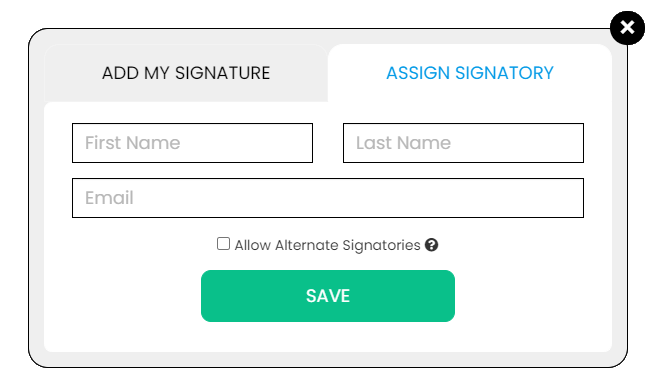
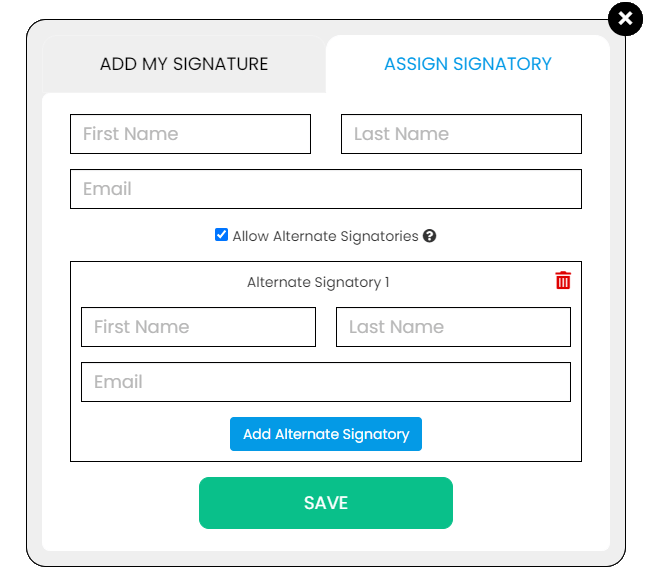
Use the Signature button to add a signature to your document and to assign a signatory. You will have the option to Type, Draw, or Upload your signature.

Use the Image button to add an image, logo, or photo to your document. The accepted formats are .jpg, .jpeg, and .png.

Use the Date button to add a date to your document. The default date format is MM/DD/YYYY, but you can modify it by typing the date format you prefer. Initially, it will display the current date, but you will be able to change it. To customize the date, you will be able to access additional tools, such as the Move text button, the Font Styles and the Font Sizes drop-down lists, the Bold, Italics, and Underline buttons, and the text alignment options, such as Left, Center, Right, and Justified buttons.

Use the Check button to add a check symbol to your document. To customize the check symbol, you will be able to access the Size adjustment tool.

Use the Cross button to add a cross symbol to your document. To customize the cross symbol, you will be able to access the Size adjustment tool.

Use the Whiteout button to white out or erase items in your document.
Use the Redact button to censor items in your document.

Use the Marker button to highlight items in your document. To customize the marker, you will be able to access the Color selection and Size adjustment tools.
Use the Insert button to add Icons, Header, Footer, Watermark, Comment, and Sticky Note to your document. The Icons button allows you select shapes such as Arrow Left, Arrow Right, Arrow Up, Arrow Down, Thumbs Up Thumbs Down, Question Mark, Exclamation Point, Circle, and Square; the Header button allows you to add a header; the Footer button allows you to add a footer; the Watermark button allows you to add a watermark by typing or uploading an image; the Comment button allows you to leave a comment in any part of the document; the Sticky Note allows you to post a note to any part of the document.

Use the Zoom button to zoom in and zoom out your document.
Use the Undo button to negate the last command done to your document.

Use the Redo button to reverse your last Undo.

Use the Help button to read instructions about how to use PDFRun’s online editor.

Use the Send for Signing button when you are done editing your document and you want to send it to another person for signing. You will need to provide the information of the recipient of your document to proceed.

Use the Email button when you are done editing your document and you want to send it to another person via email. You will need to provide the information of the recipient of your document to proceed.

Use the Download button when you are done editing your document and you want to save a copy of it to your device.

Use the Done button to finish editing your document.